Skip to content
IGlutes

Strength Training for Glutes

Four exercises do most of the work for glute growth: hip thrusts, Romanian deadlifts, Bulgarian split squats, and cable kickbacks. Each hits the glutes differently, so the strongest programs use more than one, not just whichever is trending.

By I Love Glutes EditorialPublished Editorial process

The workout

ExerciseSetsReps / timeRest
Hip thrust38–122 min
Romanian deadlift38–102 min
Bulgarian split squat2 each side8–1290 sec
Cable kickback2 each side12–1560 sec

New to resistance training? Begin with two sets per exercise for the first two weeks. Stop a set if pain, dizziness, or loss of control replaces normal muscular effort.

Exercise guide and form cues

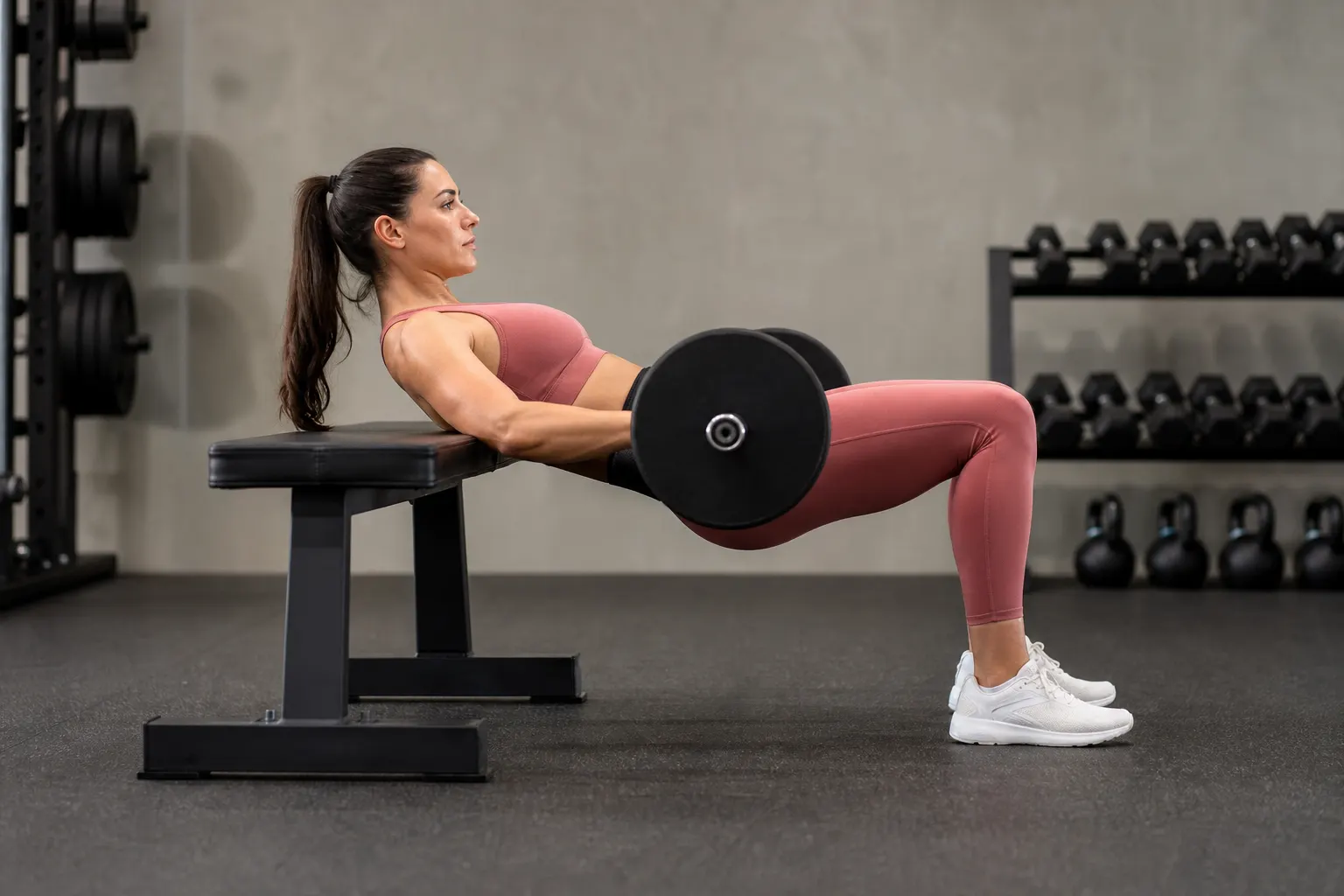
Side view of a woman performing a barbell hip thrust with her shoulders supported on a bench

Hip thrust

A well-studied hip-extension exercise that can be loaded progressively and trained through a large, controlled range of motion.

Form cue: Finish with ribs down and shins nearly vertical. Stop at full hip extension instead of arching the lower back.

Log this exercise
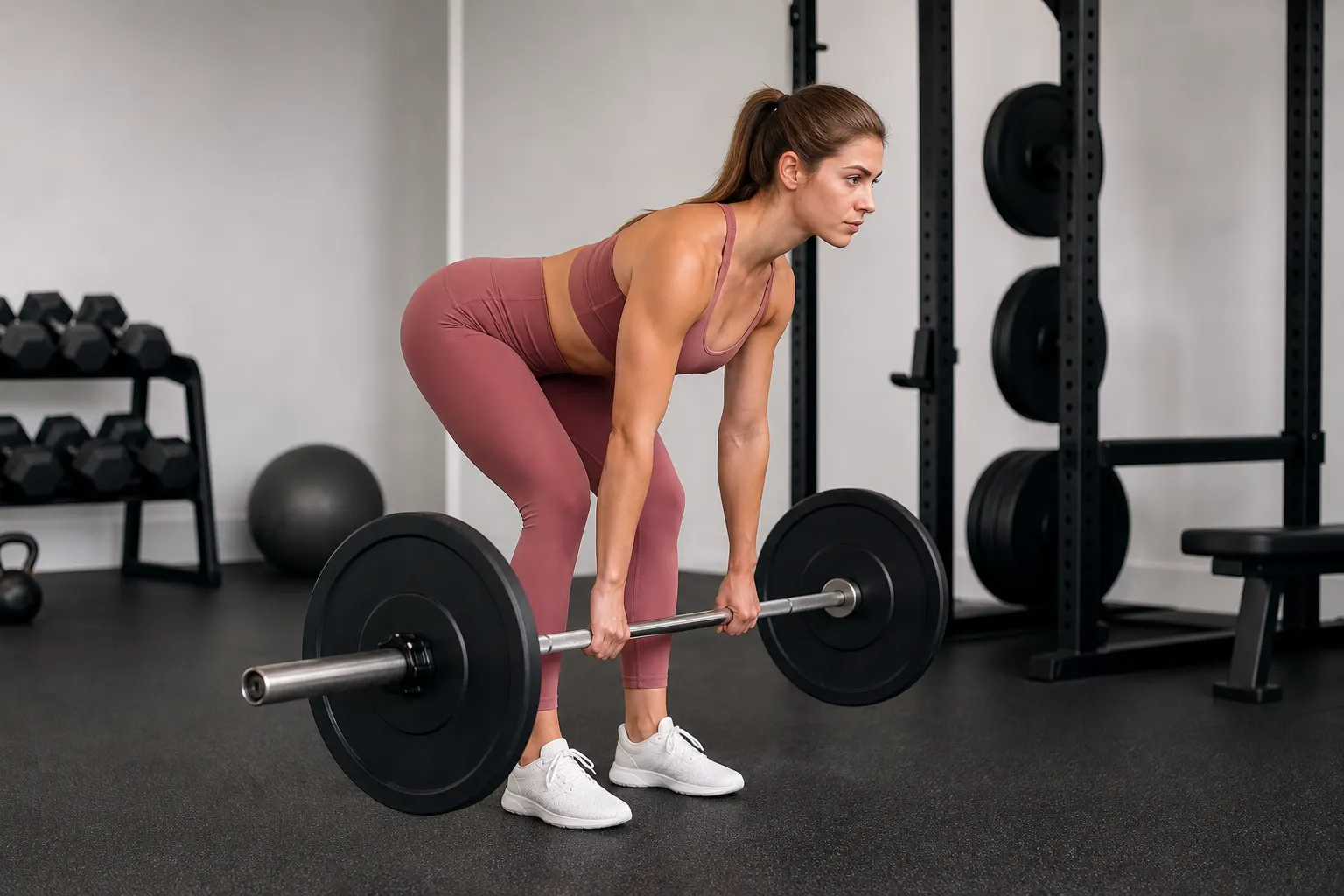
Woman demonstrating the lowered hip-hinge position of a barbell Romanian deadlift

Romanian deadlift

Trains the glutes and hamstrings together through a long stretch under load, which matters for both strength and size — the stretched position is where a lot of muscle growth actually happens.

Form cue: Keep the bar close, soften the knees, and push the hips back until the hamstrings limit the range.

Log this exercise
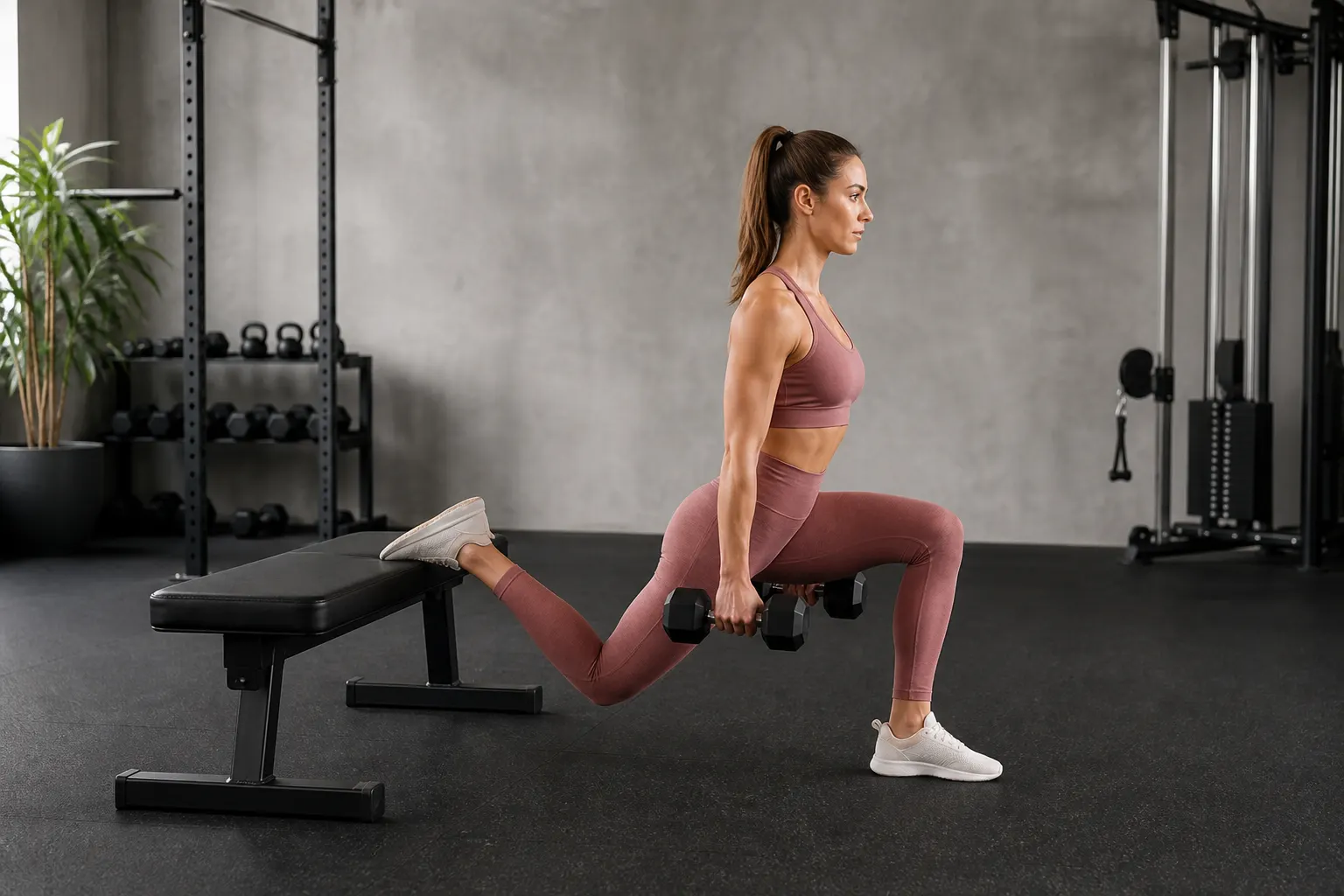
Side view of a woman performing a dumbbell Bulgarian split squat with her rear foot on a bench

Bulgarian split squat

Single-leg work that fixes side-to-side strength imbalances a barbell squat can hide, and hits the glute medius (upper-outer glute) harder than most bilateral moves.

Form cue: Use a long enough stance to keep the front heel planted, then let the front knee track in line with the toes.

Log this exercise
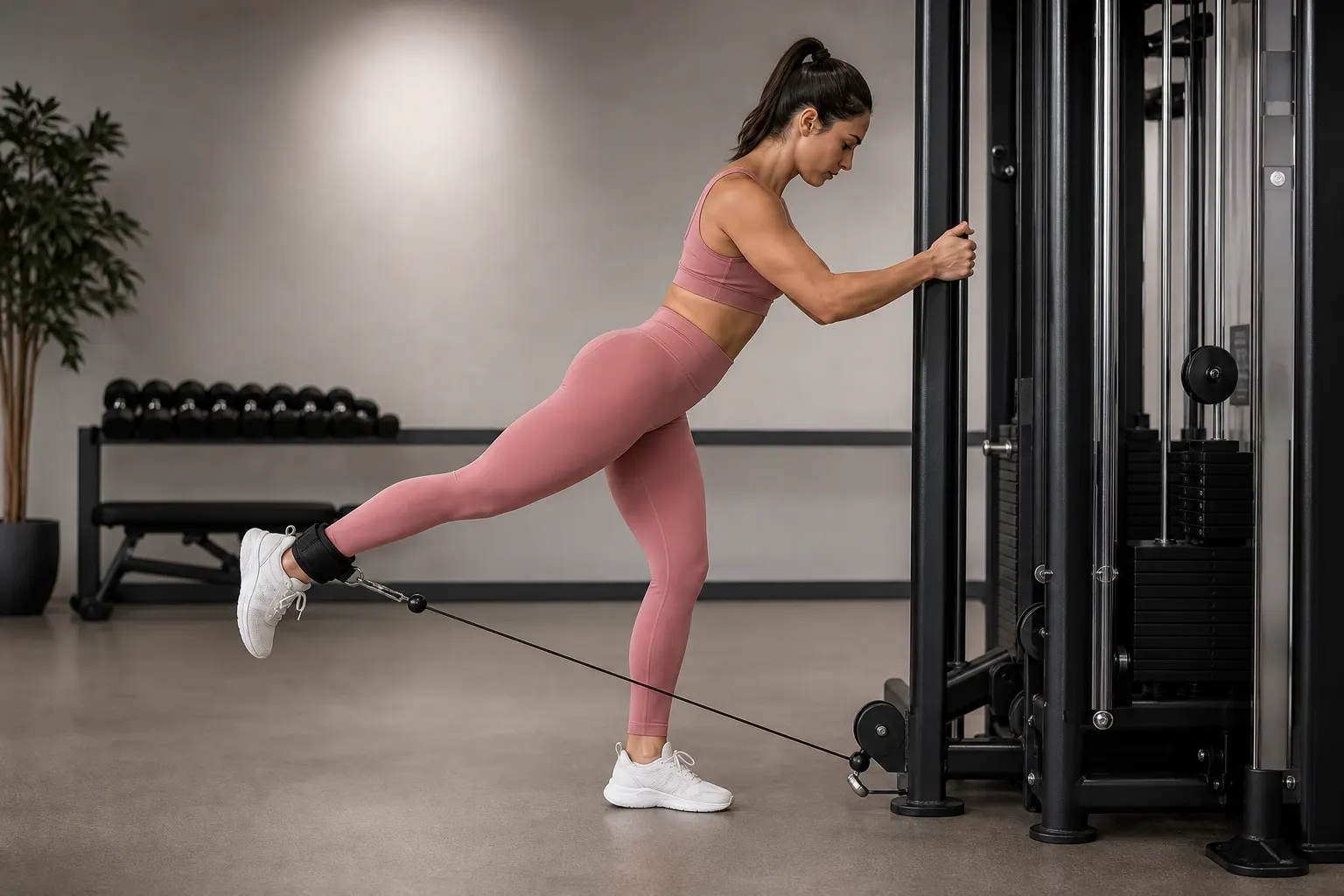
Woman performing a standing cable glute kickback with an ankle strap

Cable kickback

Emphasizes hip extension with relatively little knee movement, making it useful for focused glute work after heavier compound exercises.

Form cue: Brace against the machine and move from the hip. End the rep before the lower back starts to arch.

Log this exercise

How to progress

  1. 1.Start near the bottom of each rep range with a load you can control.
  2. 2.Add reps over the next sessions until every set reaches the top of its range.
  3. 3.Increase the load by the smallest practical amount, return to the lower end, and repeat.

Record the load and completed reps. Progress is not required every session; repeat a load until every rep looks the same before increasing it.

How to place it in your week

Two-day schedule

Monday and Thursday, or any two non-consecutive days.

Three-day schedule

Use this full session twice; make the third day lighter Pilates, bands, or mobility work.

FAQ

Frequently asked questions

How often should I train glutes for growth?

Two to three focused sessions a week is a well-supported starting point for most people — enough volume to drive growth without so much that recovery becomes the bottleneck. More experienced lifters can push toward 3–4 sessions if recovery keeps up.

Do I need heavy weight to grow glutes?

No — muscle growth responds to enough total volume and effort, not a specific weight on the bar. Higher reps with a real, near-failure effort work too. Heavier loads let you get there faster per set, which is the main advantage, not a requirement.

What does progressive overload actually mean?

Gradually asking the muscle to do more over time — more weight, more reps, more sets, or better control of the same weight. Without some version of that, the same workout stops producing new results once your body adapts to it.

Sources

  1. Resistance Training Prescription for Muscle Function, Hypertrophy, and Physical Performance in Healthy Adults — American College of Sports Medicine / PubMed (accessed August 2026)
  2. Hip thrust and back squat training elicit similar gluteus muscle hypertrophy — Frontiers in Physiology / PubMed (accessed August 2026)
  3. Resistance training prescription for muscle strength and hypertrophy in healthy adults — British Journal of Sports Medicine / PubMed (accessed August 2026)