How to Do a Bulgarian Split Squat
The Bulgarian split squat is a rear-foot-elevated single-leg exercise for the glutes and thighs. A stable setup and controlled front leg matter more than using a high bench or heavy load.
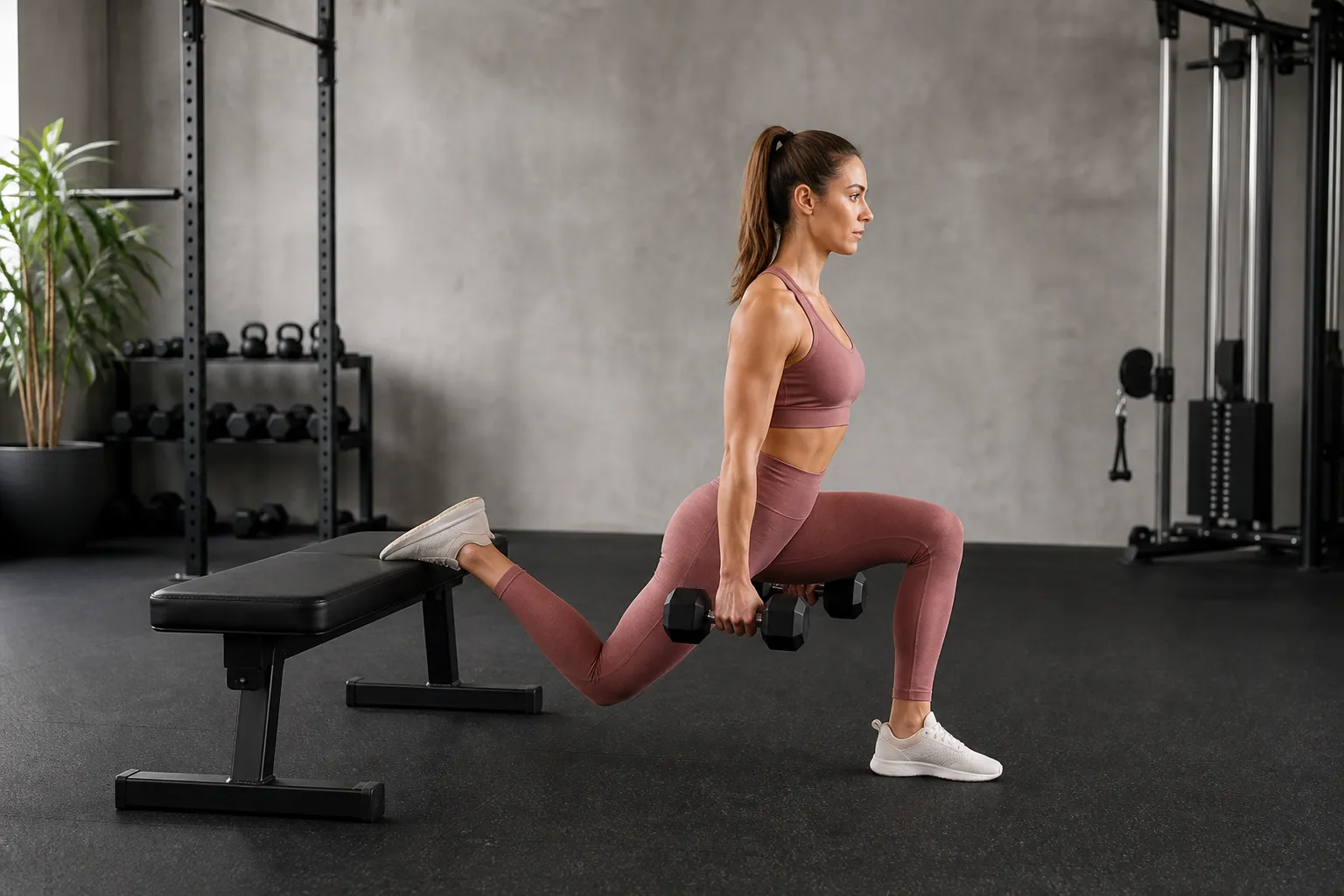
How to do it
- 1
Choose a stable support
Use a bench or box that will not slide. Start with a lower support if a standard bench makes the position uncomfortable.
- 2
Set the working foot
Stand one long stride in front of the support, then place the top of the rear foot on it. Keep most of your pressure through the front foot.
- 3
Brace and descend
Hold the ribs and pelvis steady as both knees bend. Let the torso incline slightly while the front knee tracks in line with the toes.
- 4
Use a controlled depth
Lower as far as you can while keeping the front foot planted and the hips controlled. The rear knee does not have to touch the floor.
- 5
Drive through the front leg
Push the floor away and stand without bouncing off the rear leg. Reset your balance before the next repetition.
Common mistakes and fixes
Standing too close to the bench
Fix: Move the front foot forward until you can descend without crowding the front ankle or losing balance.
Pushing hard from the rear foot
Fix: Treat the rear leg as a kickstand and keep pressure centered across the whole front foot.
The front knee collapses inward
Fix: Reduce the load and guide the knee in the same general direction as the middle toes.
Rushing an unstable setup
Fix: Hold a rack for support or begin with a regular split squat until each rep is repeatable.
Regressions and variations
Supported split squat
Keep both feet on the floor and hold a rack to learn the path.
Supported rear-foot elevation
Hold a stable upright so balance does not limit the legs.
Goblet variation
Hold one weight at the chest for a compact loading option.
Dumbbell variation
Hold weights at the sides once the bodyweight version is stable.
Programming starting points
Start with 2–3 sets of 6–10 controlled reps per side once or twice per week. Train the less confident side first, match its reps on the other side, and add load gradually.
Frequently asked questions
How far should my front foot be from the bench?
Use a distance that lets you keep the whole front foot down and descend comfortably. Your proportions determine the exact position, so adjust before loading.
Should I stay upright or lean forward?
A small forward torso angle is normal. Use the angle you can control without rounding, twisting, or shifting off the front foot.
Do I need dumbbells?
No. Bodyweight is appropriate while learning. Add one dumbbell, two dumbbells, or a barbell only after balance and range are consistent.
What if the rear-foot position hurts?
Use a lower support, rest the rear toes instead of the top of the foot, or perform a floor-based split squat.
Sources
- The impact of resistance training on gluteus maximus hypertrophy — Frontiers in Physiology / PubMed (accessed August 2026)
- Resistance Training Prescription for Muscle Function, Hypertrophy, and Physical Performance in Healthy Adults — American College of Sports Medicine / PubMed (accessed August 2026)