Skip to content
IGlutes

Yoga for Glutes

Yoga won't build glute size on its own, but it does something strength training usually skips: hip mobility and recovery that make every other glute exercise on this site work better and feel safer.

By I Love Glutes EditorialPublished Editorial process

The workout

ExerciseSetsReps / timeRest
Bridge pose25 breaths30 sec
Pigeon pose1 each side5–8 breathsAs needed
Warrior III2 each side3–5 breaths30 sec
Chair pose25 breaths30 sec

Use a cushion beneath the front hip in pigeon pose, or replace it with a reclined figure-four stretch if the position is uncomfortable.

The poses

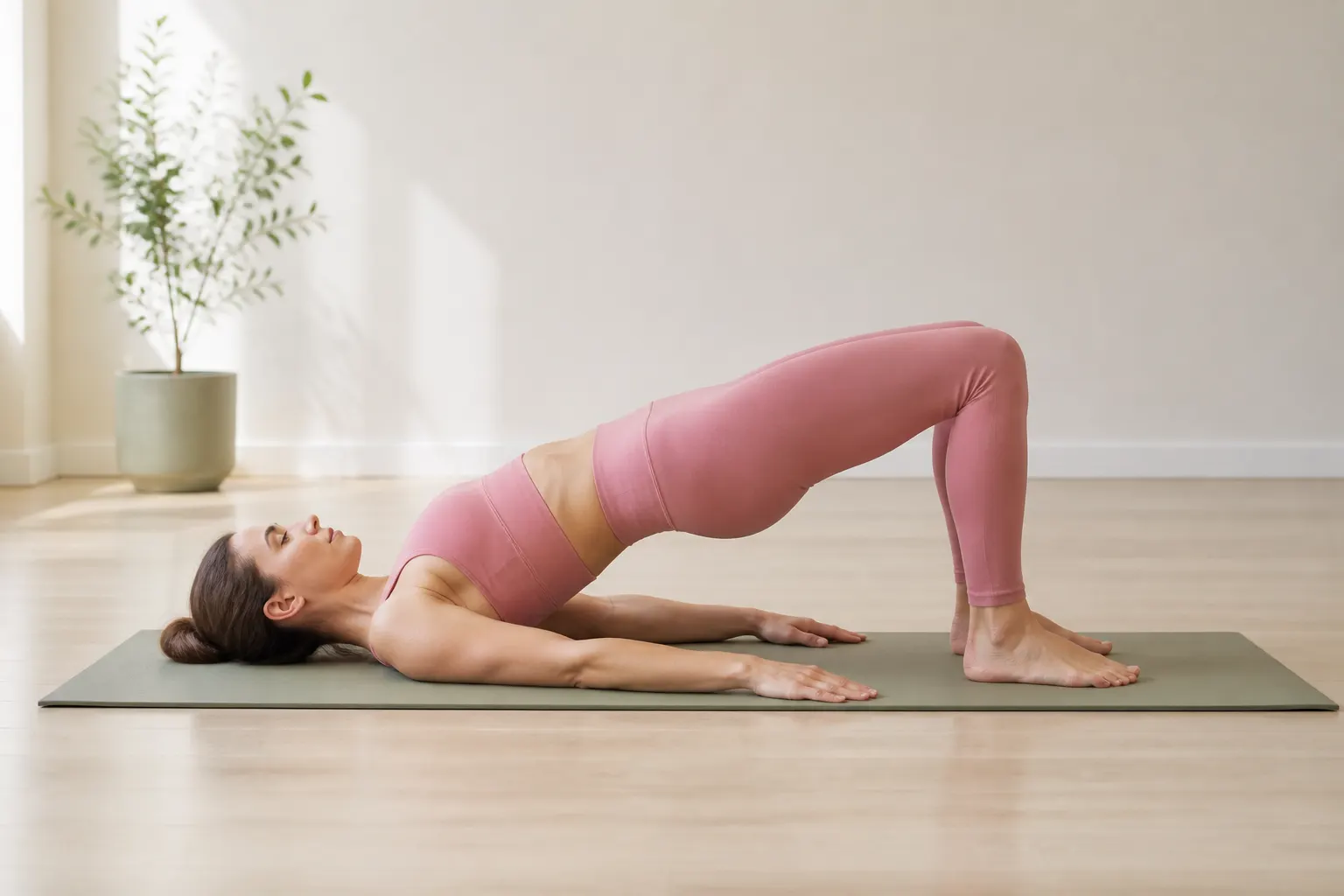
Side view of a woman holding yoga bridge pose on a mat

Bridge pose

The yoga counterpart to a Pilates bridge — same glute engagement, held longer and paired with breath, which makes it as much a mobility and recovery tool as a strength one.

Form cue: Keep the knees tracking forward and distribute the lift through the feet rather than pressing into the neck.

Log this exercise
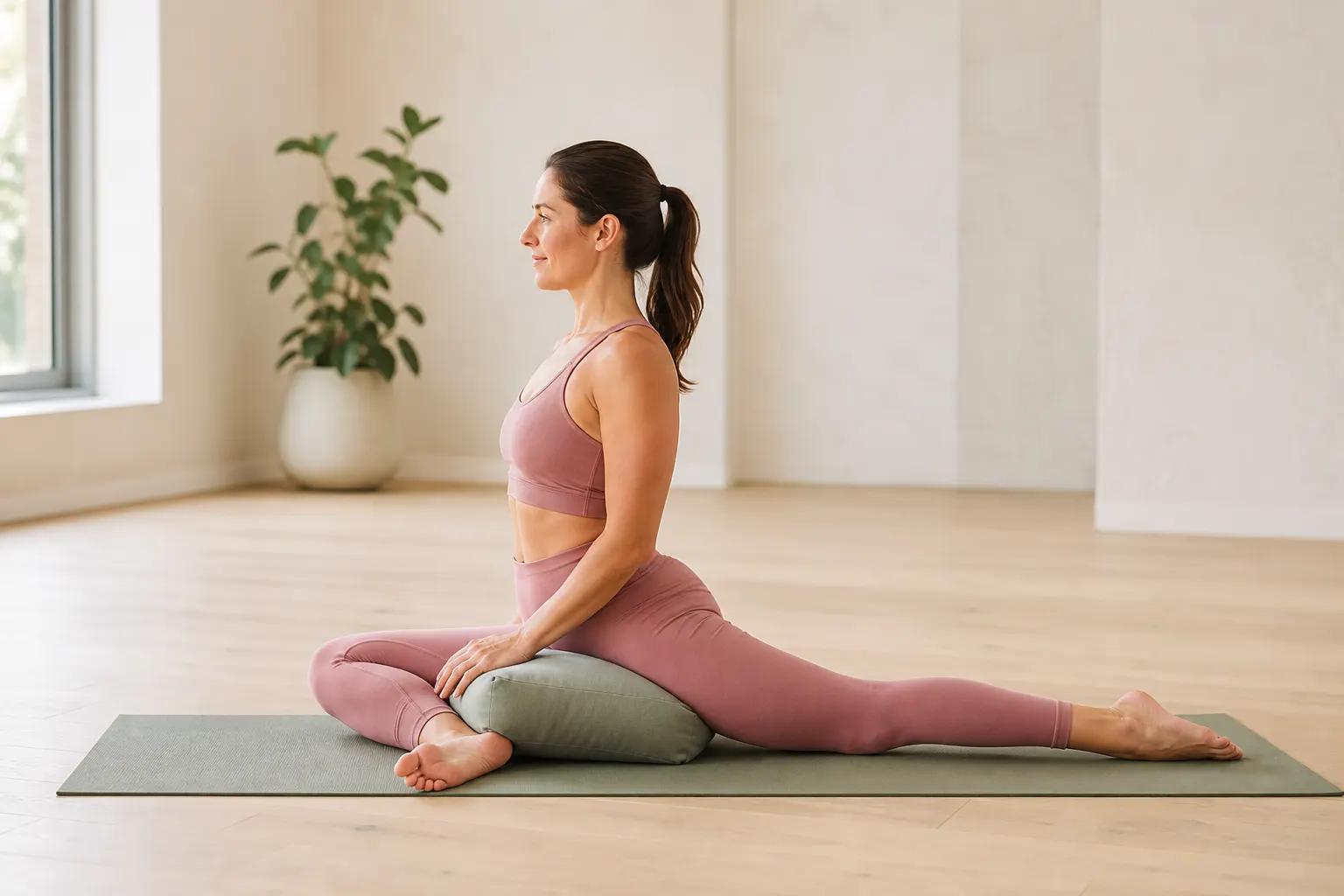
Woman demonstrating an upright supported pigeon pose

Pigeon pose

Opens the hips and glutes directly, which matters because tight hips limit how deep and how safely you can load a squat or hip thrust elsewhere in training.

Form cue: Support the front hip if it floats. Choose a comfortable shin angle and stop if the front knee feels strained.

Log this exercise
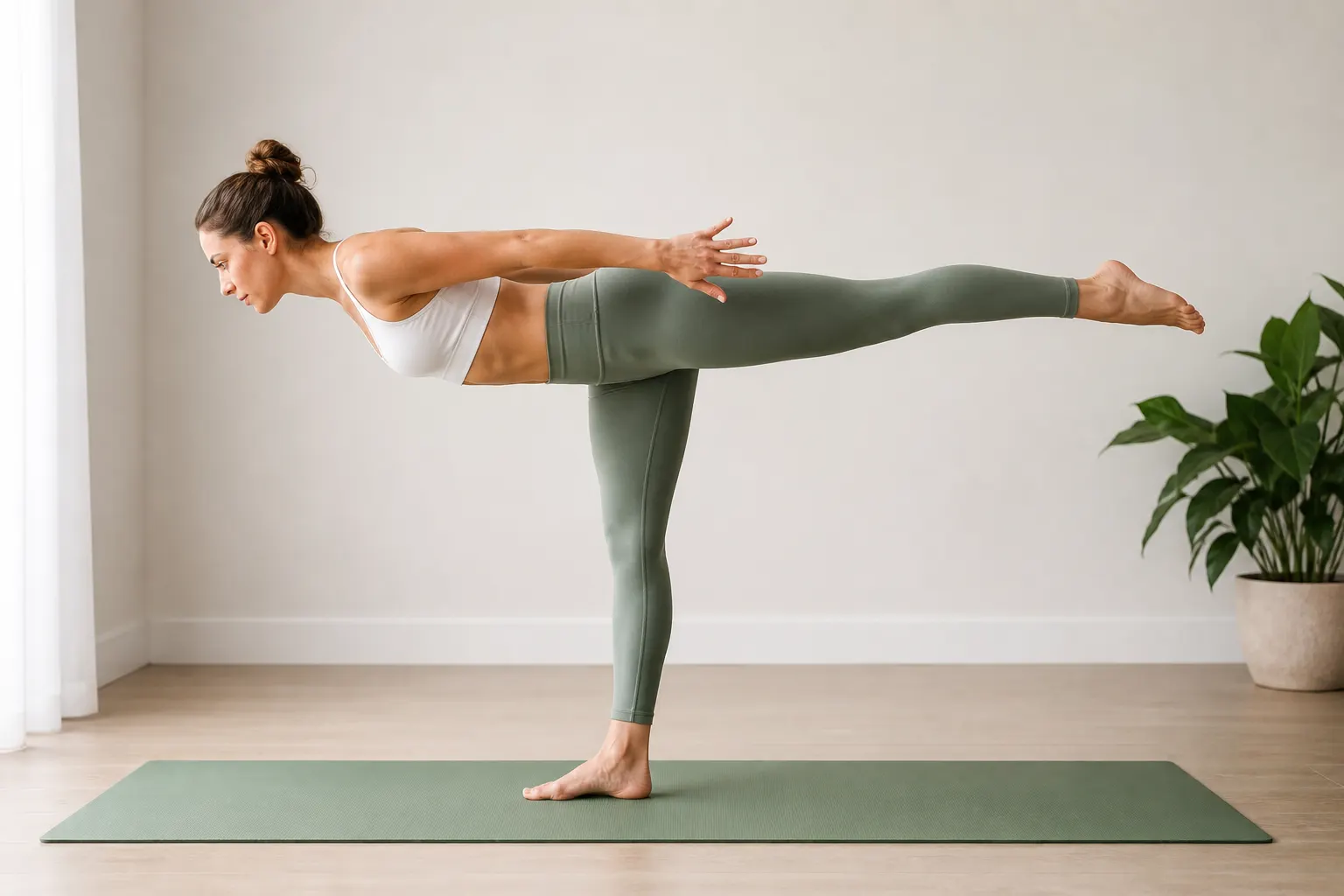
Side view of a woman balancing in Warrior III pose

Warrior II and III

Single-leg stability work that trains the glutes to control the hip under load — the same quality that keeps a heavy split squat or lunge from wobbling.

Form cue: Keep both hip points facing the floor and soften the standing knee; use a wall or chair when balance limits alignment.

Log this exercise
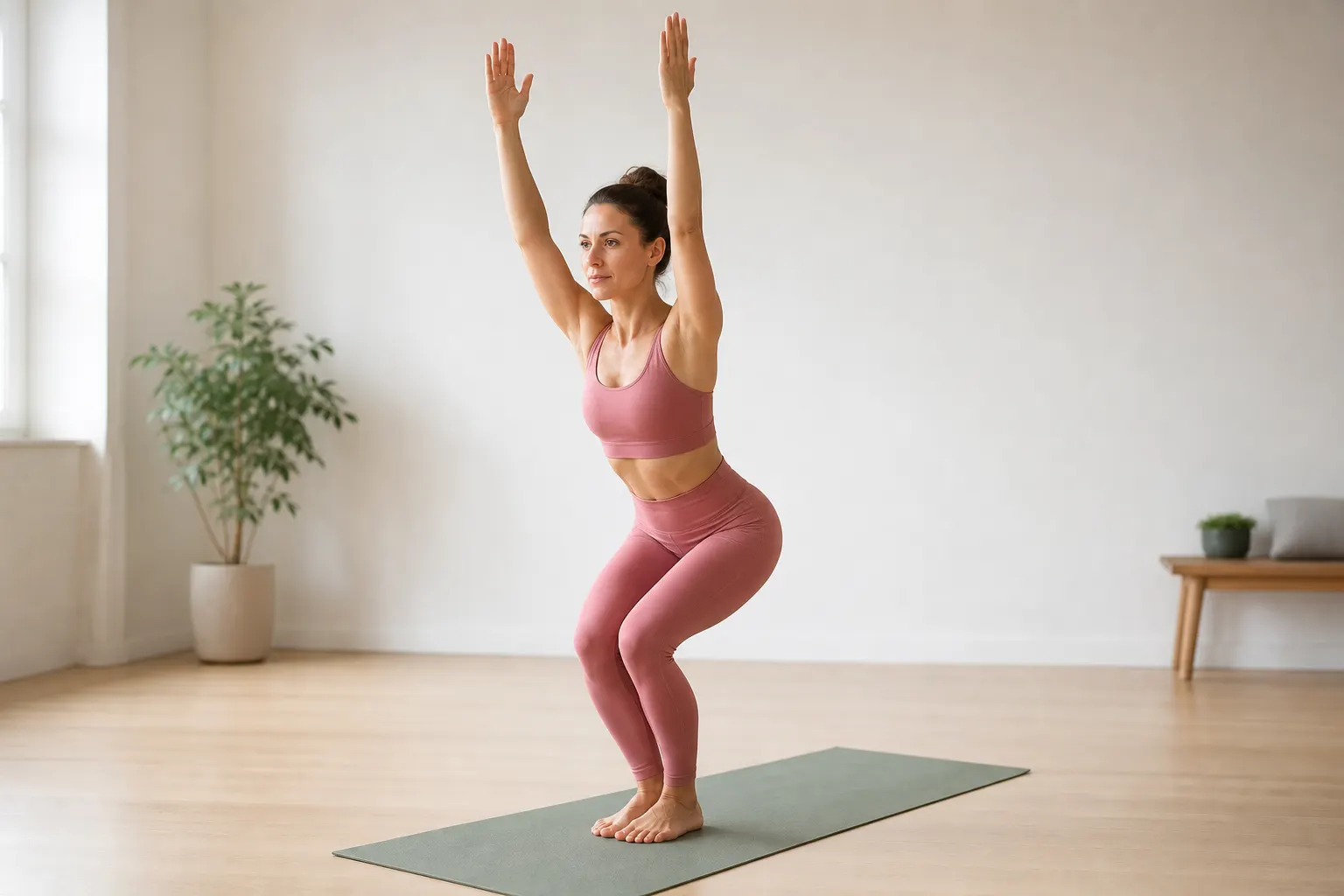
Woman holding chair pose with her arms overhead

Chair pose

A held squat position that builds glute and quad endurance without any equipment — useful as a warm-up before a strength session or a workout on its own.

Form cue: Sit the hips back while keeping the feet grounded. Lower the arms if raising them causes the ribs to flare.

Log this exercise

Where this fits in a week

Most people get the most out of yoga on rest days or right after a strength session, not instead of one — 10–15 minutes is enough to loosen tight hips without adding real fatigue.

How to deepen the practice safely

Progress in this flow means steadier alignment and easier breathing, not forcing a larger range of motion.

  1. 1Use a wall, blocks, or cushions to make each position stable and comfortable.
  2. 2Increase from three calm breaths to five, then eight, without straining or holding your breath.
  3. 3Reduce support only when balance and alignment stay consistent on both sides.
FAQ

Frequently asked questions

Is yoga enough to grow glutes on its own?

Yoga builds mobility, control, and muscular endurance rather than the progressive overload that drives significant size gains. It's genuinely useful alongside strength training — better hip mobility usually means better depth and form on squats and hip thrusts — but it's a complement, not a replacement, for loaded training.

What is yoga actually good for if not muscle growth?

Recovery between harder training days, hip and hamstring flexibility that makes other glute exercises safer and deeper, and body awareness that carries over into better form everywhere else.

What's the difference between this and Pilates?

They overlap more than people expect. Yoga tends to hold static positions longer and pairs them with breathwork; Pilates tends to move through more controlled reps. For glutes specifically, both work — this page and our Pilates page cover which moves come from which tradition.