Skip to content
IGlutes

Pilates for Glutes

Pilates trains the glutes through control and time-under-tension rather than heavy load — a bridge hold, a clamshell, and ring work done well can activate the same muscles a hip thrust does, just differently. It's a training method, not a separate goal from building glute strength.

By I Love Glutes EditorialPublished Editorial process

The workout

ExerciseSetsReps / timeRest
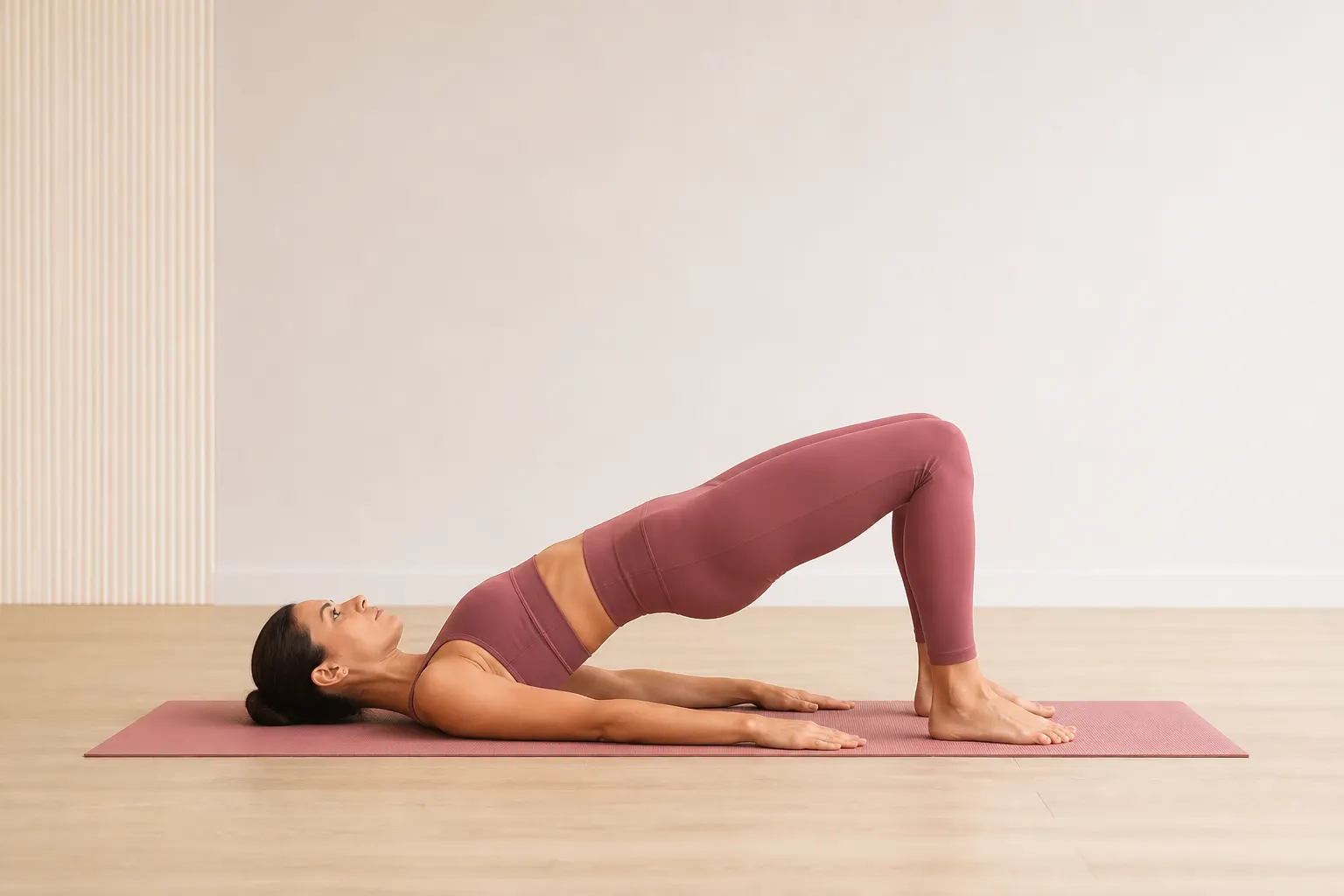
Bridge with squeeze hold312–1545 sec
Clamshell2 each side12–1530 sec
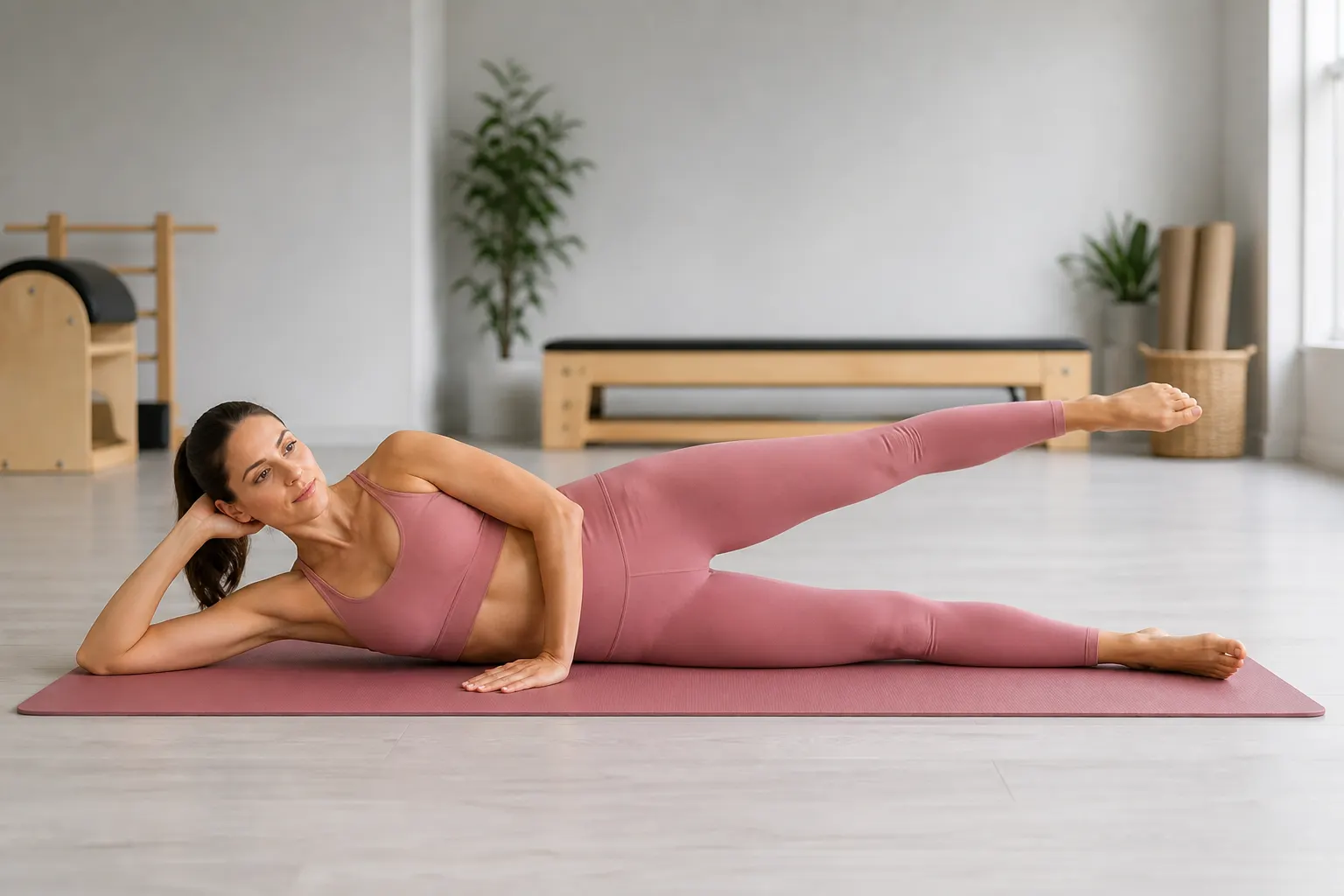
Side-lying leg lift2 each side12–1530 sec
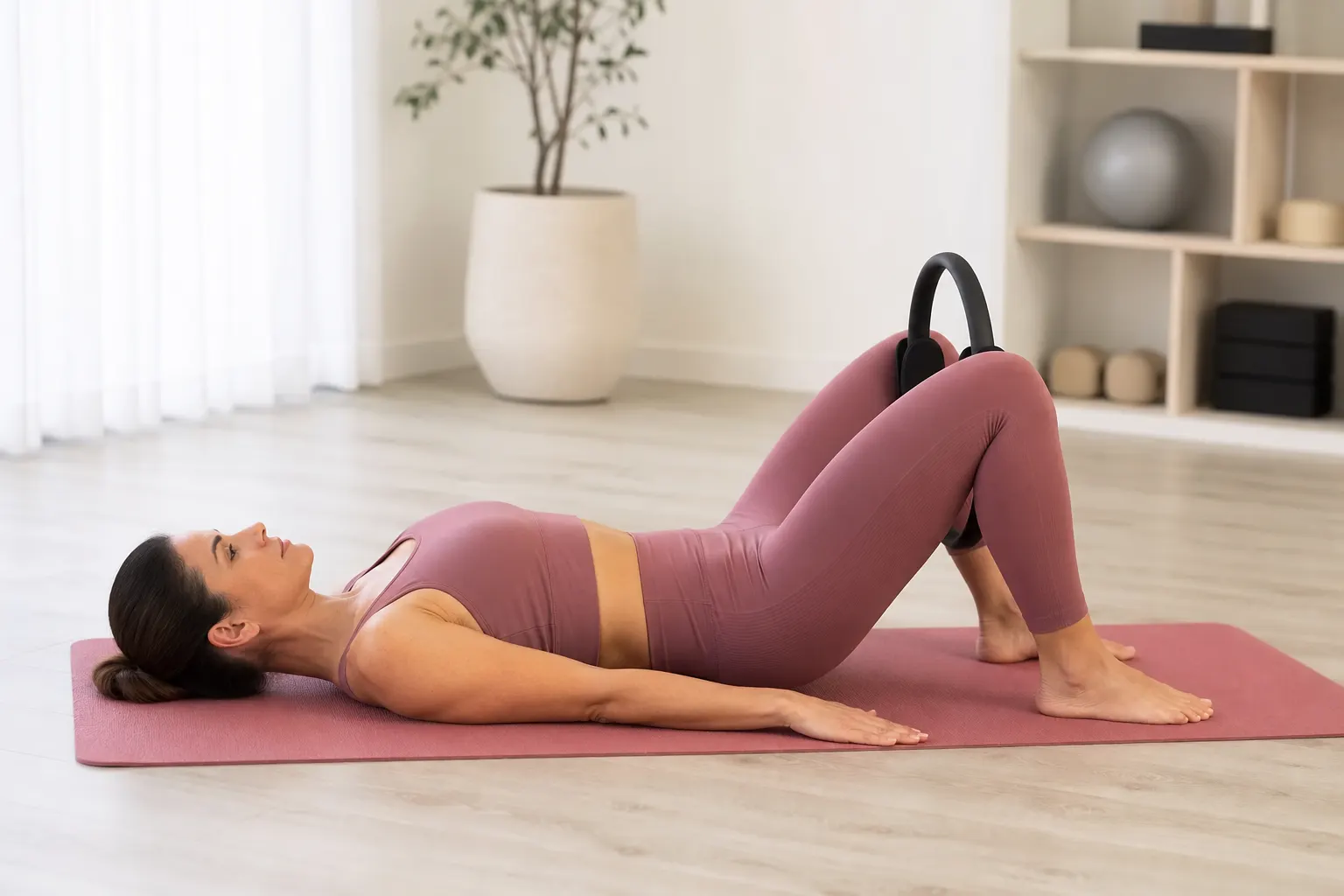
Ring squeeze330 sec30 sec

No ring? Place a folded pillow between your knees for light feedback, or repeat the bridge hold instead.

The moves

Side view of a woman holding the top of a controlled Pilates glute bridge

Bridge with a squeeze hold

The Pilates version adds a 2–3 second hold at the top and slower control on the way down, which keeps tension on the glutes longer than a quick bodyweight bridge.

Form cue: Exhale as you lift, keep the ribs heavy, and hold only as high as you can without arching the lower back.

Log this exercise
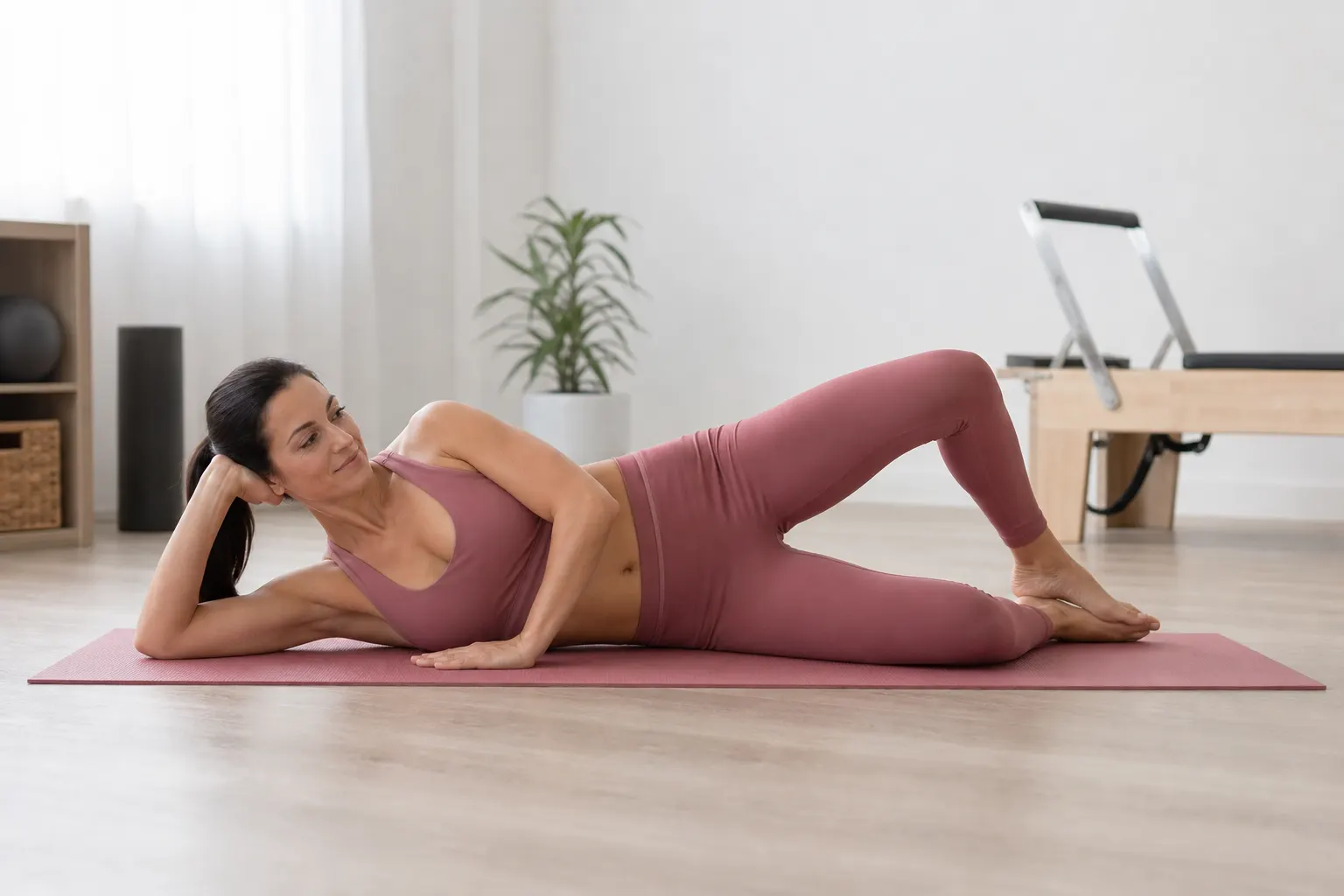
Woman demonstrating a side-lying Pilates clamshell with stacked feet

Clamshell

A small range of motion that isolates the glute medius — the muscle most responsible for hip stability, and one heavy lifting tends to undertrain.

Form cue: Keep your hips stacked and feet touching. Make the range smaller if your top hip starts rolling backward.

Log this exercise
Woman performing a straight-leg side-lying Pilates leg lift

Side-lying leg lift series

Low-impact, joint-friendly volume for the outer glutes — useful on recovery days when a full lifting session is too much but doing nothing isn’t the goal either.

Form cue: Keep the toes facing forward and the pelvis still; lift from the side of the hip instead of hiking the waist.

Log this exercise
Woman lying on a mat with a Pilates ring positioned between her thighs

Ring (magic circle) squeezes

Constant resistance through a squeeze-and-release motion that a barbell or dumbbell can't really replicate — see our Pilates equipment guide for picking one.

Form cue: Use a gradual squeeze rather than crushing the ring. Keep both feet planted and the pelvis neutral.

Log this exercise

What to get first

A mat and a Pilates ring cover nearly everything on this page. See our Pilates equipment guide for what's worth buying and in what order.

How to progress

Pilates becomes harder through control and resistance—not by rushing through more repetitions.

  1. 1First, complete every rep without the pelvis rolling, twisting, or dropping.
  2. 2Add a two- or three-second pause at the hardest point of each movement.
  3. 3Increase repetitions, then add a light ring, loop band, or ankle weight only when control remains unchanged.
FAQ

Frequently asked questions

Can Pilates alone build noticeable glute muscle?

Bodyweight mat Pilates can improve control and muscular endurance, particularly for beginners. Continuing to build strength or muscle generally requires progressive challenge through harder variations, more volume, or added resistance such as bands or ankle weights.

Is Pilates better than strength training for glutes?

Neither is strictly better — they do different jobs well. Pilates is excellent for activation, control, and the smaller stabilizer muscles; heavier strength work (hip thrusts, deadlifts) is what drives the biggest size gains. Most well-built programs use both.

How is this different from regular Pilates?

It isn't a different discipline — it's standard Pilates movements selected and sequenced specifically for glute activation and strength, rather than the general full-body flow a typical class runs through.