Skip to content
IGlutes

Home Glute Workouts

No gym, no equipment, no problem — glute bridges, step-ups, and single-leg work cover most of what a beginner program needs, all doable in a small apartment with furniture you already own.

By I Love Glutes EditorialPublished Editorial process

The workout

ExerciseSetsReps / timeRest
Glute bridge315–2045 sec
Single-leg glute bridge2 each side8–1245 sec
Step-up3 each side8–1260 sec
Curtsy lunge2 each side8–1245 sec

If single-leg bridges are too difficult, repeat the two-leg bridge. If they are easy, pause for two seconds at the top of every rep.

The moves

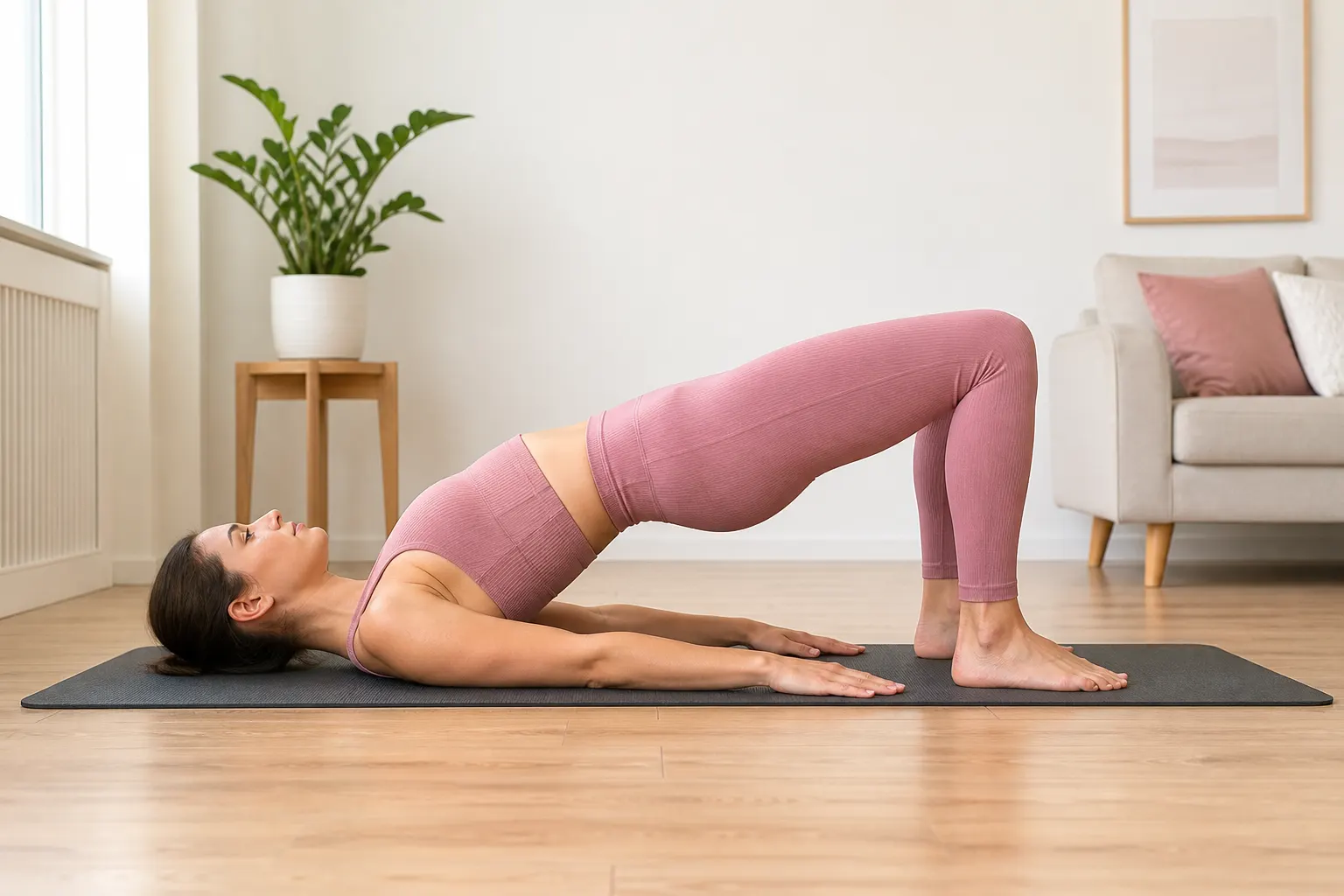
Side view of a woman performing a bodyweight glute bridge at home

Glute bridge

The no-equipment starting point for a reason — it teaches the hip-extension pattern every other glute exercise on this site builds on.

Form cue: Drive through the whole foot, keep the ribs down, and stop when the hips are extended—not when the back arches.

Log this exercise
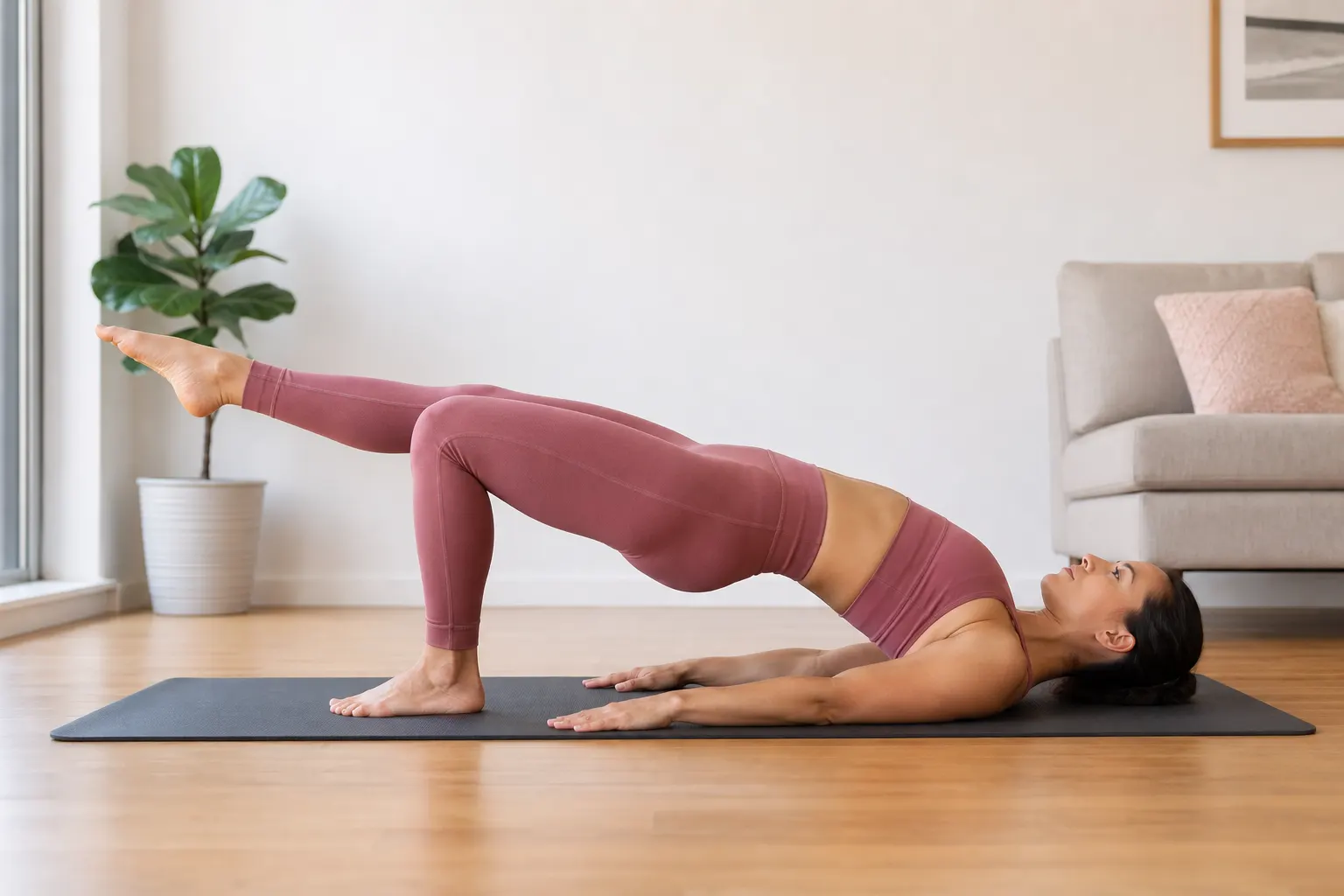
Woman holding a single-leg glute bridge with her pelvis level

Single-leg glute bridge

Doubles the load on one side without needing any weight — a simple way to keep progressing once the two-leg version gets easy.

Form cue: Keep both hip bones level. Regress to two legs if the working-side hip drops or twists.

Log this exercise
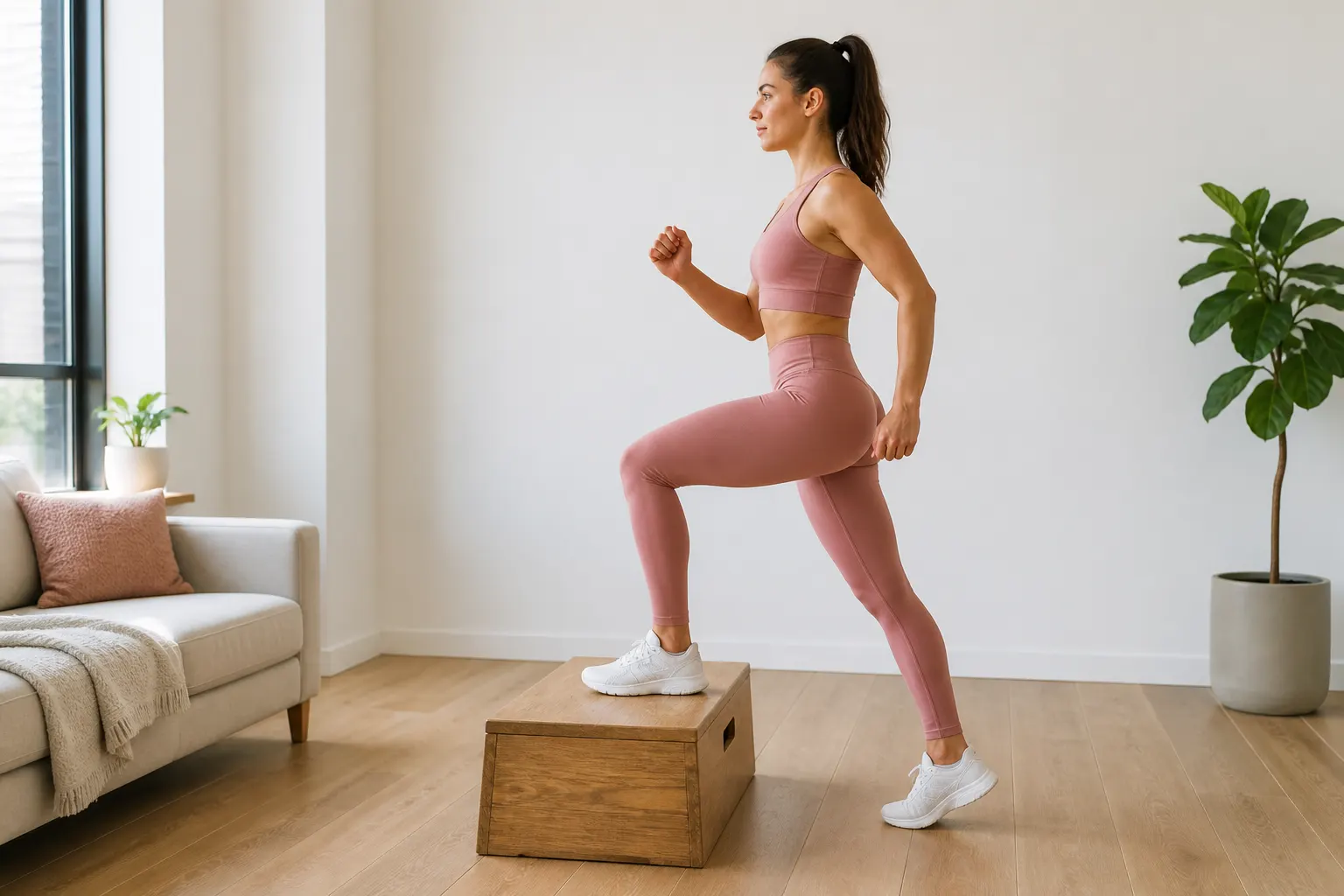
Woman stepping onto a sturdy wooden exercise step in a living room

Step-up

A sturdy chair or low table is enough. Step-ups hit the glutes hard through a full range of motion and translate directly to real-world strength.

Form cue: Place the whole foot on the step and let the top leg do the work instead of pushing off the floor.

Log this exercise
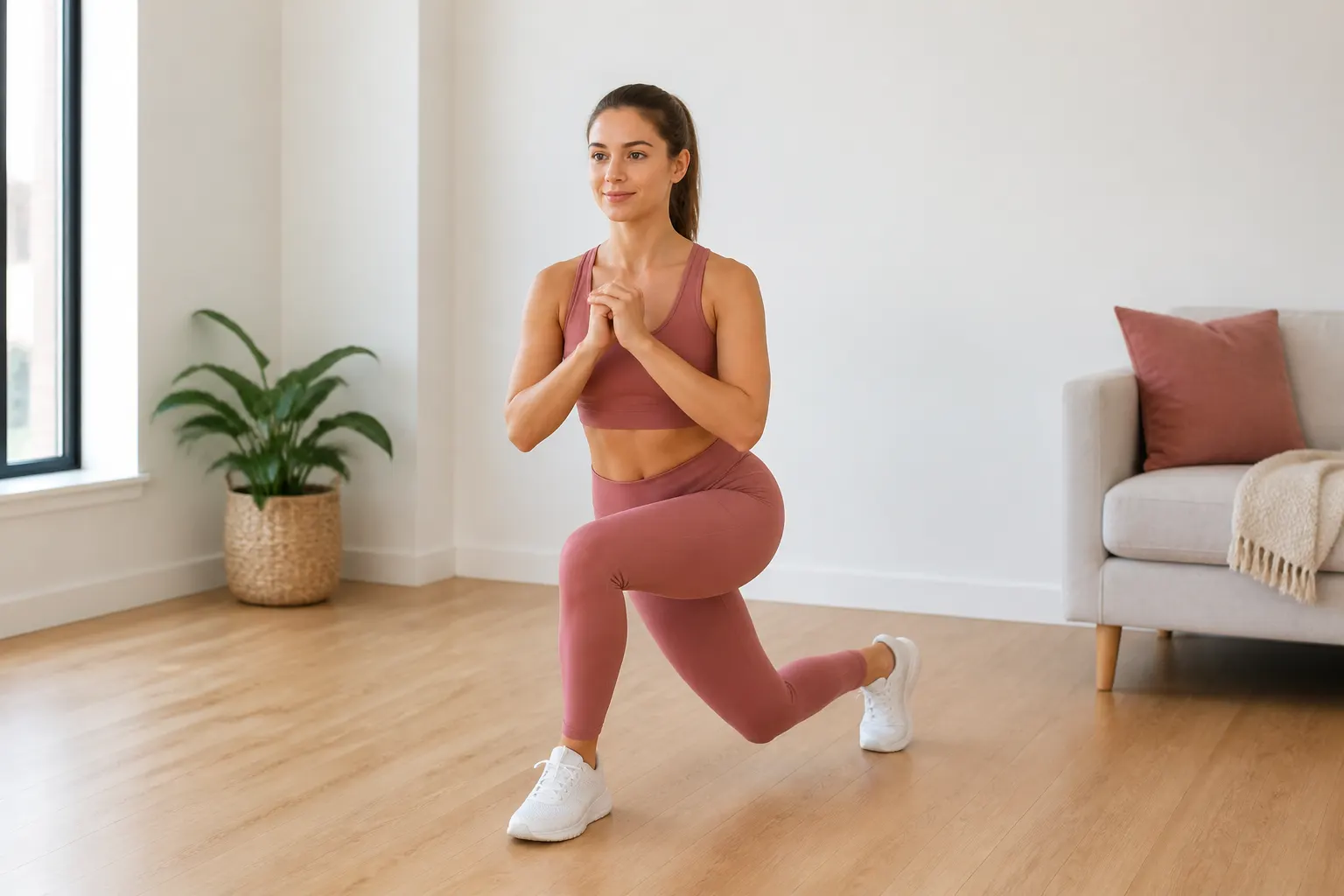
Woman demonstrating the lowered position of a bodyweight curtsy lunge

Curtsy lunge

Crosses one leg behind the other on the way down, which angles the movement to hit the glute medius more than a straight lunge does.

Form cue: Cross back only as far as your front knee can continue tracking comfortably in line with the toes.

Log this exercise

When to add resistance

Once 15–20 reps of a move stop feeling challenging, a resistance band is the cheapest, smallest way to keep progressing without needing more space or a gym membership — see our resistance bands guide.

How to progress

Change one variable at a time so you can tell what is actually improving.

  1. 1Add repetitions until you can complete the top of the range without losing balance or shortening the movement.
  2. 2Use pauses, slower lowering, or a single-leg version before adding external load.
  3. 3Add a resistance band or light dumbbell once the hardest bodyweight variation is consistently controlled.
FAQ

Frequently asked questions

Can I actually build glutes without a gym?

Yes, especially starting out — bodyweight moves like step-ups and single-leg bridges provide plenty of stimulus for beginners. Progress eventually requires more resistance than your own bodyweight alone provides, which is where resistance bands (cheap, small, apartment-friendly) come in.

How long should a home glute workout be?

15–20 minutes, 3–4 times a week, is a realistic and effective amount for most people — enough volume to matter without requiring a big time commitment that is hard to sustain.

What is the one piece of equipment worth buying for home workouts?

A set of resistance bands. They cost under $20, take up almost no space, and are the single easiest way to keep progressing once bodyweight exercises stop being challenging.