How to Do a Step-Up
The step-up is an adjustable single-leg exercise for the glutes and thighs. A secure platform, complete foot contact, and a controlled descent matter more than using the tallest box available.
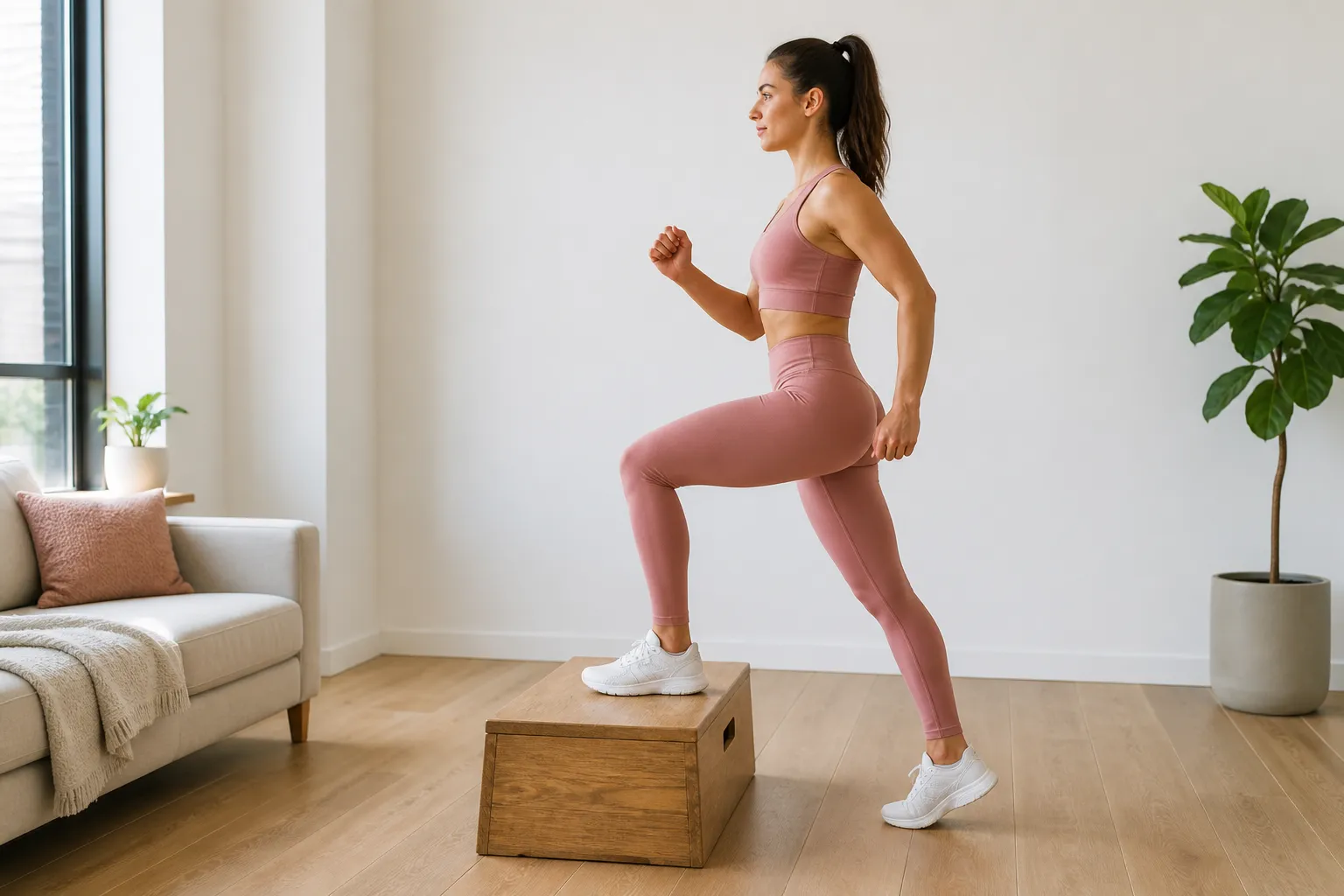
How to do it
- 1
Choose a secure platform
Use a box or step that cannot tip or slide. Begin low enough to place the entire working foot on top without twisting.
- 2
Plant the working foot
Place the whole foot on the platform and line the knee up with the toes. Keep the trailing foot on the floor for balance.
- 3
Lean and brace
Use a small forward torso angle while keeping the trunk controlled and the hips facing ahead.
- 4
Step onto the platform
Push through the top foot to stand. Use only as much help from the floor leg as needed for a smooth repetition.
- 5
Lower with control
Reach the trailing foot back to the floor slowly while the working knee continues to track over the foot.
Common mistakes and fixes
Choosing a box that is too high
Fix: Lower the platform until you can keep the whole foot down and stand without twisting or jumping.
Launching from the floor leg
Fix: Slow the start and keep pressure on the top foot. Use hand support if balance is the issue.
The knee drops inward
Fix: Reduce height or load and keep the knee moving in the same general direction as the toes.
Dropping quickly to the floor
Fix: Control the lowering phase and use a rail or rack until you can place the foot quietly.
Regressions and variations
Supported step-up
Hold a rail or rack so you can focus on the working leg.
Low step-up
Reduce the range to build control and confidence.
Dumbbell step-up
Add load at the sides once bodyweight reps are consistent.
Lateral step-up
Stand beside the platform for a different movement direction.
Programming starting points
Start with 2–3 sets of 8–12 reps per side once or twice per week. Use the same platform height for both sides, begin with the less confident leg, and add load only when the descent stays controlled.
Frequently asked questions
How high should the step be?
Start below knee height. The best height lets you plant the entire foot, keep the pelvis controlled, and stand without jumping from the lower leg.
Should I alternate legs?
Either approach works. Completing one side at a time can make technique easier to monitor; alternating sides can distribute fatigue.
Do step-ups train the glutes?
Step-ups require hip and knee extension, so the glutes and thigh muscles both contribute. Platform height, load, control, and individual proportions affect how the exercise feels.
How do I add weight safely?
First make the bodyweight version stable. Then add one light dumbbell on the opposite side or two dumbbells at the sides while keeping the same controlled path.
Sources
- The impact of resistance training on gluteus maximus hypertrophy — Frontiers in Physiology / PubMed (accessed August 2026)
- Resistance Training Prescription for Muscle Function, Hypertrophy, and Physical Performance in Healthy Adults — American College of Sports Medicine / PubMed (accessed August 2026)